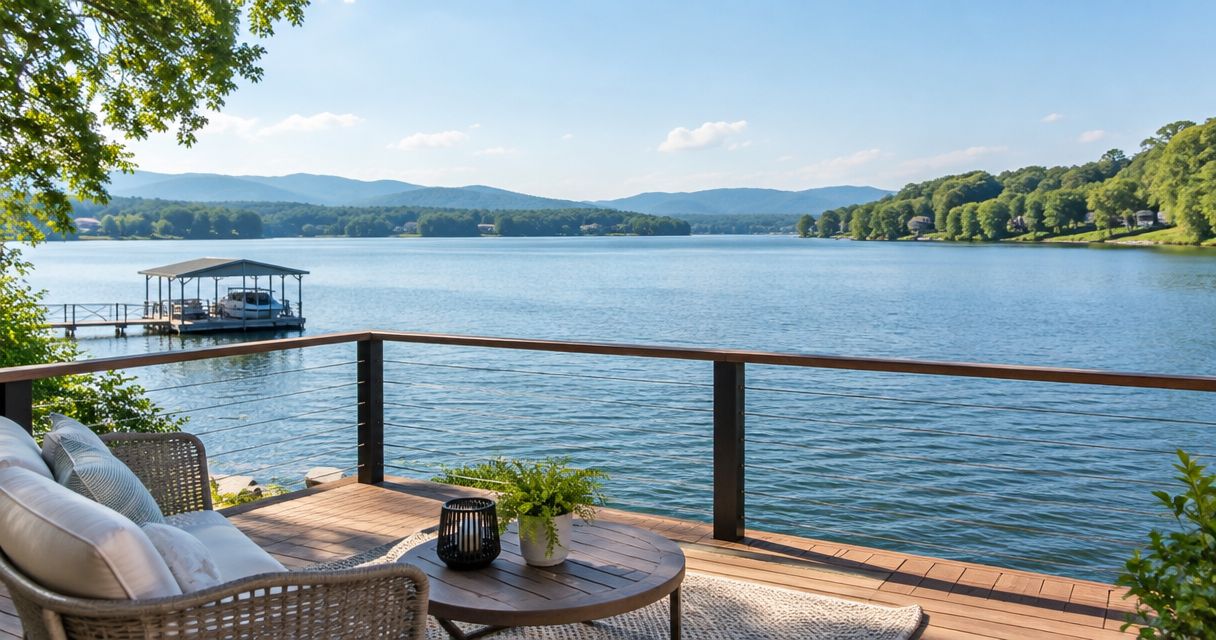
Before buying in Hampton on the Lake, confirm whether the specific property includes a legal right to reach or use the water, what activities that right allows, and who controls it. A neighborhood name, water view, or nearby dock does not establish those rights; when comparing Ooltewah homes for sale in 2026, match every water-access claim to the property records and governing documents before committing.
- For Ooltewah homes for sale, verify water access for the specific parcel—not the neighborhood name.
- Separate waterfront ownership, shared access, and water views; they answer different buying questions.
- Creativity Team recommends checking written access rights before treating water access as a reason to buy.
- Ask who controls docks, maintenance, guest use, and any transfer of permissions.
Why this matters
Water access is not a single feature you can confirm from a listing photograph. You need to know where you can go, what you can do there, and whether that permission continues after the sale.
Creativity Team provides private real estate advice for buyers comparing homes in Ooltewah and the Chattanooga area. For a purchase involving water, the useful starting point is a precise question: What rights come with this parcel, and what evidence establishes them?
Use this 2026 checklist to separate a property's documented rights from the way it is described. Do not treat the categories below as confirmed features of Hampton on the Lake; use them to investigate the particular home you are considering.
What should I ask about water access before buying in Hampton on the Lake?
Ask the seller to identify the claimed access, then request the documents that support it. Your agent can coordinate the questions, while a title professional or real estate attorney reviews the legal documents within their role.
- Identify the parcel. Match the home, lot boundaries, and any claimed access area to the property being sold. A street address alone does not explain every boundary or shared right.
- Locate the access. Ask for the exact route from the property to the water. Establish whether that route crosses another parcel or a common area.
- Find the legal basis. Request the deed, recorded plat, applicable easements, and association documents. An easement is a legal right to use someone else's land for a specified purpose.
- Define the permitted use. Ask separately about walking to the shoreline, launching a boat, swimming, fishing, and using a dock. Permission for one activity does not establish permission for another.
- Check transfer and approval requirements. Determine whether any permission belongs to the property, the current owner, or a separate agreement. Identify required approvals before you rely on continued use.
- Put unresolved questions into the purchase process. Discuss document-review conditions and deadlines with your agent and attorney before signing or waiving protections.
A water-access claim is not resolved until the documents explain both the right and its limits. Keep the written answers with the records for the specific property, rather than in a general neighborhood research folder.
Which kind of water access is being described?
These are comparison categories, not a description of confirmed amenities at Hampton on the Lake. Ask which category, if any, applies to the home.
| Access description | Best for | Potential benefit | Limitation to investigate |
|---|---|---|---|
| Waterfront parcel | Buyers seeking direct shoreline adjacency | The parcel borders the water | Shoreline adjacency does not settle dock or construction permissions |
| Recorded access easement | Buyers seeking a defined route across other land | Documents can establish the route and permitted use | The easement's wording limits what you can do |
| Association-controlled access | Buyers comfortable with shared facilities | Use can be governed through common rules | Rules, maintenance duties, and guest permissions need review |
| Water view only | Buyers whose priority is the outlook | The view can be enjoyed without using the shoreline | A view does not establish a right to reach the water |
Waterfront property: verify boundaries and shoreline permissions
If a home is described as waterfront, start with the parcel boundary. Ask whether a current survey is available and whether the recorded plat identifies land between the lot and the water.
A survey depicts boundaries and identified property features; it does not replace legal review of ownership or access rights. If the survey, deed, and listing description appear inconsistent, resolve the difference before relying on the waterfront description.
Then separate ownership from proposed use. Ask who has authority over shoreline changes, docks, vegetation removal, or other work you want to undertake. Do not assume that owning land beside water authorizes changes at the shoreline.
For your 2026 property review, describe the intended activity plainly. Asking whether you can keep a boat at a dock produces a more useful answer than asking whether the home has lake access.
Shared water access: verify who can use it and how
Shared access requires two separate checks: whether the property has the right to use it and what rules govern that use. If an association controls the area, request the applicable declaration, rules, and maintenance information.
Ask whether access extends to your household, guests, tenants, or future buyers. Do not assume the same permission applies to every user. An owner's explanation is useful context, but it is not a substitute for the governing language.
Also establish how you physically reach the shared area. A route that looks convenient during a showing still needs a documented basis if it crosses land you will not own.
Shared access is best for buyers comfortable with shared rules and decision-making. The tradeoff is control: review who can change rules, approve work, or restrict particular activities before deciding whether the arrangement fits your plans.
An existing dock: verify permission and transfer requirements
A dock's presence answers a physical question, not every legal one. Ask who owns it, who is authorized to use it, and which documents govern its location and operation.
Request any applicable permits, licenses, agreements, and maintenance records. If the seller says permission transfers with the home, ask the relevant issuing authority or document reviewer to confirm the transfer process in writing.
Keep dock condition separate from dock permission. An inspection can address physical concerns within the inspector's scope; it does not establish ownership, authorization, or transferability.
If a dock is central to your decision, resolve those questions before treating it as part of the property's usable features. A photograph cannot establish your future right to keep a boat there.
Why water access varies from property to property
The same neighborhood label does not establish identical rights for every parcel. These are the factors to investigate:
- Recorded boundaries: The land included in the sale determines where your ownership begins and ends.
- Easement wording: A recorded right can specify a route, purpose, users, and restrictions.
- Association documents: Shared facilities can come with use rules and maintenance obligations.
- Separate permissions: A permit, license, or agreement can carry conditions distinct from the deed.
- Physical conditions: The route, slope, shoreline, and condition of improvements affect practical use.
- Your intended activity: Walking to the water and storing a boat require different questions.
The practical test is simple: can the documented rights support the activity that matters to you? If not, compare the home on its other merits rather than treating uncertain access as an included benefit.
How do I check water access before making an offer?
Start with a written description of your intended use, then match it to the records. This keeps the investigation focused and gives the seller a clear question to answer.
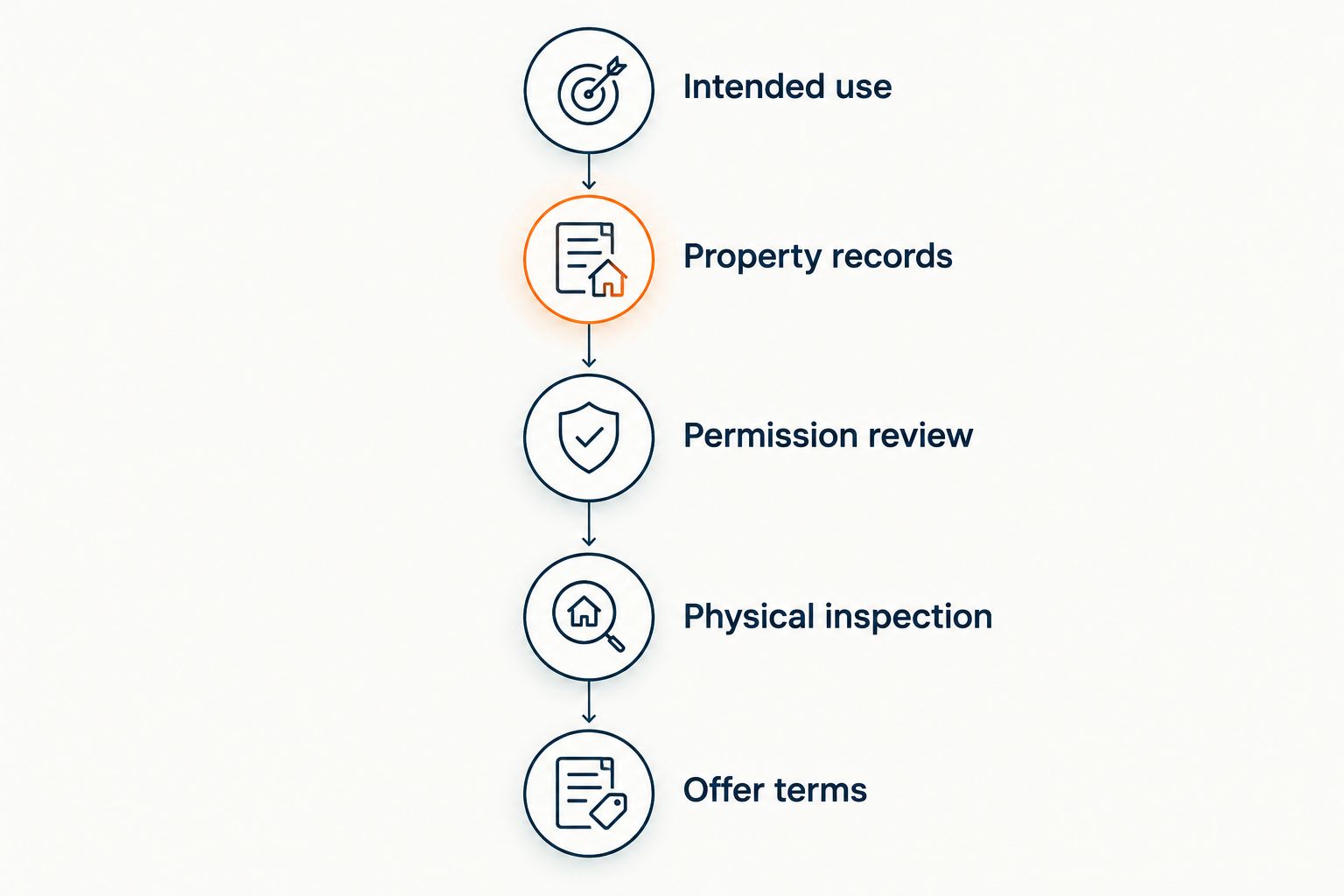
Use these headings in your property notes:
- Intended use: Describe the activity you want, such as reaching the shoreline or using an existing dock.
- Property records: List the documents that identify ownership, access, and restrictions.
- Permission review: Identify any authority, association, or agreement that controls the activity.
- Physical inspection: Check the route and relevant improvements with appropriate professionals.
- Offer terms: Address unresolved matters through contract language and deadlines reviewed by your advisors.
A contingency is a contract condition that must be satisfied or otherwise addressed under the agreement's terms. Ask your agent and attorney whether a document-review or other appropriate contingency should address the access question; do not assume a standard inspection provision covers every concern.
In a 2026 offer, identify the actual documents and answers you need. A vague request to verify lake access leaves too much room for different interpretations.
Does a water view mean I can reach the water?
A water view does not establish a legal right to reach the water. Check the property boundaries and any recorded access rights before crossing neighboring land or using a shared route.
If the view is enough for your plans, evaluate it as a view rather than as boating or shoreline access. That distinction helps you compare homes without paying attention to a feature you cannot actually use as intended.
Can I use a dock that is already there?
An existing dock does not, by itself, establish your right to use it. Confirm ownership, applicable permissions, and any transfer or approval requirements.
Ask a separate question about condition. Legal permission and physical suitability are different parts of the buying decision, and neither answer replaces the other.
What should I ask during a relocation visit?
Use your visit to test the physical experience, not to settle legal questions by appearance. Walk only where you have permission, locate the claimed access point, and compare what you see with the documents.
Notice the route from the house, changes in grade, and the condition of any relevant improvements. Ask what further inspection is appropriate rather than making a technical judgment from a short showing.
For a 2026 relocation visit, carry the same questions from property to property. Consistent notes make it easier to distinguish a home that fits your plans from one whose water-related description simply sounds appealing.
FAQ
What should I check first when comparing Ooltewah homes for sale with water access?
First identify the specific parcel and the written basis for the claimed water access. Then check the permitted activities, route, restrictions, and any transfer requirements.
Does Hampton on the Lake's name guarantee water access?
The neighborhood name does not establish water-access rights for a specific property. Review the parcel's deed, recorded plat, applicable easements, and governing documents.
What documents should I request from the seller?
Request the deed, recorded plat, available survey, applicable easements, association documents, and any relevant dock permissions. The documents needed depend on the access being claimed.
Can my guests use shared water access?
Guest use depends on the applicable access documents and rules. Ask specifically about guests rather than assuming an owner's permission extends to everyone visiting the home.
Does a home inspection confirm dock permits?
A home inspection does not replace verification of dock permissions or legal rights. Confirm the inspector's scope and have the relevant documents reviewed separately.
Should I make an offer before the water-access questions are answered?
Discuss unresolved water-access questions with your agent and attorney before making an offer. If you proceed, use appropriate contract terms and deadlines rather than relying on a verbal assurance.
Who should review an access easement before I buy?
A real estate attorney or title professional should review an access easement within their professional role. Your agent can help coordinate the records and questions, but legal interpretation needs the appropriate reviewer.
One last thing
Ask the same question in reverse: What water-related activity would I be disappointed to learn I cannot do here? That answer identifies the permission you need to verify first.
Creativity Team is best for buyers who want private real estate advice while comparing Ooltewah homes for sale. Bring the property address and your intended use so the conversation starts with the decision you actually need to make.
Discuss Your Property Questions
Ask Creativity Team about the water-access questions behind your Ooltewah home search.
Helping You Make Chattanooga Home.